The best dental websites in the UK are no longer just digital brochures. They are patient decision-making tools. Before someone calls your reception team, they have usually searched Google, compared practices, checked reviews, scanned treatment pages and judged whether your website feels trustworthy enough to contact.
That means your website has a commercial job to do. It should help the right patients find your practice, understand your treatments, feel reassured by your team and take the next step without friction.
For private, cosmetic and specialist practices, strong dental website design is often the centre of the whole marketing system. SEO, Google Ads, social media and local search can all create attention, but your website decides whether that attention becomes a real enquiry.
This guide breaks down 10 examples of high-converting dental website features and page types, so you can see what the best dental websites in the UK tend to get right.
01.What actually makes one of the best dental websites in the UK?
A great dental website is not defined by animation, expensive photography or a homepage that looks good on a designer’s screen. The best dental websites are clear, fast, useful and built around how patients actually search, compare and book.
The website is structured for Google, local SEO, AI search and treatment-led search intent.
Patients can understand treatments, fees, finance, location and next steps without digging.
The site uses team photos, reviews, case examples, accreditations and reassuring copy.
Calls, forms, WhatsApp clicks, bookings and consultation requests can be measured properly.
For dental practices, this matters because patients rarely make decisions from one page alone. They move between the homepage, treatment pages, reviews, finance information, team profiles and contact routes. If one of those steps feels weak, they can leave and choose another practice.
02.10 examples of high-converting dental practice website features
These examples are not about copying one design trend. They are the core website patterns that help dental practices turn online visitors into better patient enquiries.
A homepage that explains the practice in seconds
01Best for: every dental practice, especially private and cosmetic clinics competing locally.
Your homepage should quickly answer four questions: who you help, what you offer, where you are and why a patient should trust you. The best dental websites avoid vague hero copy like “creating beautiful smiles” and instead lead with clear outcomes, key treatments and simple contact routes.
What to include: a clear headline, main treatments, location, reviews, team reassurance, online booking or enquiry button, and a strong link to your most important treatment pages.
Treatment pages built around search intent
02Best for: Invisalign, dental implants, composite bonding, cosmetic dentistry, emergency dentistry and private general dentistry.
High-performing dental websites treat every key service as a serious landing page, not a short paragraph hidden inside a services list. A strong treatment page should explain the problem, treatment options, benefits, process, suitability, fees, finance, FAQs and next step.
Why it works: treatment-led pages support dental SEO and give patients enough confidence to enquire.
Mobile-first pages that make contacting easy
03Best for: practices relying on local search, emergency enquiries and paid traffic.
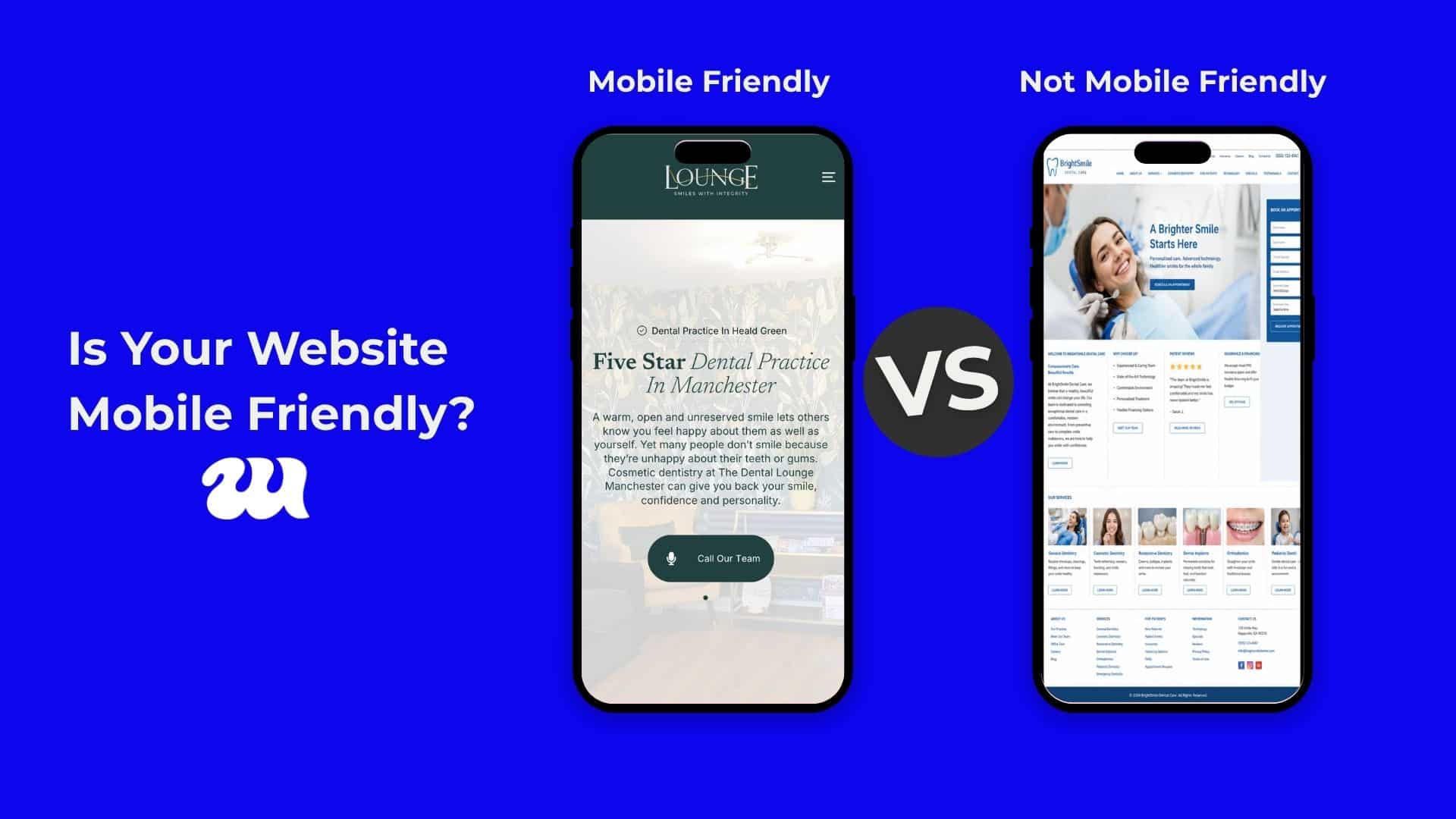
Many patients browse dental websites on their phones while they are commuting, comparing practices or dealing with a dental problem. A mobile-first dental website should make calls, WhatsApp, directions, online booking and forms obvious without forcing visitors to pinch, zoom or scroll endlessly.
What to check: sticky contact buttons, readable text, fast loading images, short forms, visible reviews and clear treatment navigation.
Trust sections that feel human, not forced
04Best for: nervous patients, high-value treatments and practices with strong teams.
Trust is one of the biggest reasons people choose a dental practice. The best dental websites use team photography, dentist profiles, patient reviews, accreditations and genuine practice imagery to make the clinic feel safe and credible before a patient ever calls.
What to avoid: generic stock smiles, unsupported claims, hidden team information and testimonials with no context.
Fees and finance pages that reduce hesitation
05Best for: cosmetic dentistry, Invisalign, implants, smile makeovers and private dentistry.
Patients often want to understand cost before they enquire. That does not always mean showing every possible price, but the best dental websites give enough guidance to reduce uncertainty. Clear fees, finance options, consultation information and treatment ranges can help patients feel more prepared.
Conversion tip: link fees and finance pages from treatment pages, not just from the menu.
Before-and-after galleries with proper context
06Best for: cosmetic, orthodontic, implant and restorative treatment pages.
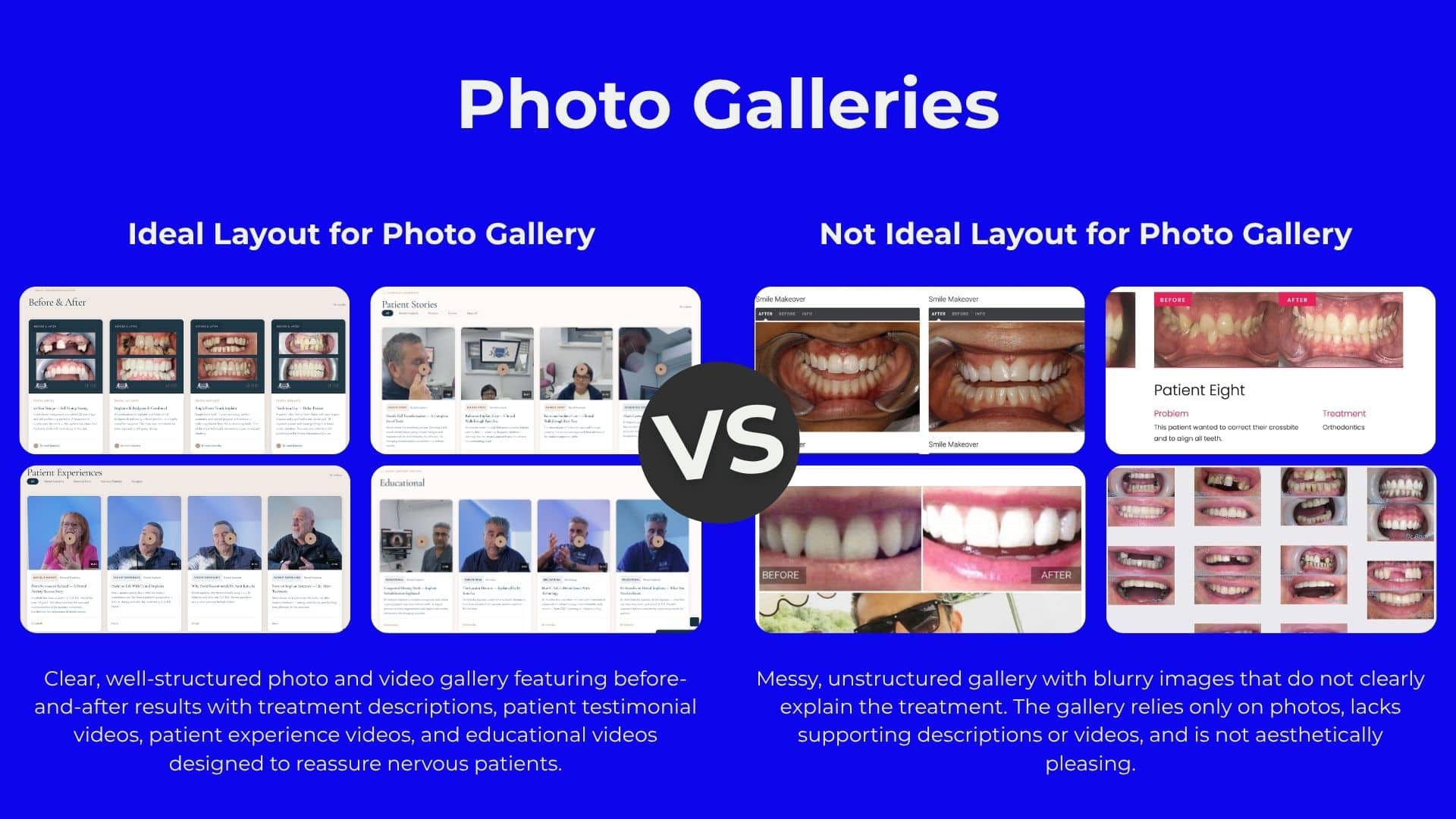
Visual proof can be powerful, but it needs context. Strong dental website galleries should be clearly organised by treatment type so patients can find relevant examples quickly. A patient looking for composite bonding, Invisalign or implants should not have to scroll through a mixed gallery with no structure.
Video adds even more value because it helps patients understand the person behind the result. Short clinician explainers, patient journey clips and treatment overview videos can build trust faster than generic treatment copy, especially for nervous patients or higher-value enquiries.
Important: make sure case images and videos are consented, accurate, clinically reviewed and presented carefully.
Location pages that support local visibility
07Best for: practices attracting patients from nearby towns, villages or city areas.
For local SEO, your website should make your location easy to understand. That includes your address, service areas, embedded map, travel information, parking details, opening hours and treatment relevance for nearby patients.
SEO benefit: well-written location content can support searches like “dentist near me”, “Invisalign in [location]” and “dental implants near [location]”.
Clear conversion routes for every patient type
08Best for: practices that receive mixed enquiries across emergency, cosmetic, general and specialist treatments.
Not every patient wants to contact you in the same way. Some want to call. Some prefer WhatsApp. Some want to book online. Some need a longer consultation form. The best dental websites offer clear routes without overwhelming the page.
What to include: phone links, enquiry forms, WhatsApp, online booking, consultation CTAs and location directions, all tracked properly.
Blog content that supports treatment and website authority
09Best for: practices investing in long-term SEO and patient education.
A blog should not exist for random updates. Useful dental blogs answer patient questions, support treatment pages and build topical authority through dental SEO. For example, an Invisalign page can be supported by blogs about cost, suitability, treatment time and comparison with braces.
Wise approach: blog content should internally link back to key treatment pages, service pages and location pages so search engines understand the relationship between topics.
Tracking that shows what is actually working
10Best for: practices spending money on SEO, Google Ads, social media or multi-channel campaigns.
A dental website should not leave you guessing. Enquiry tracking, call tracking, form tracking and campaign tagging help practices see which pages and channels are creating patient opportunities, whether traffic comes from Google Ads, social media or organic search.
Why it matters: without tracking, your website might look good but still fail to prove which treatments, campaigns or pages are driving growth.
Planning a new dental website?
Wise designs dental websites around SEO, conversion, compliance-aware copy, treatment pages and enquiry tracking from the start.
Explore Dental Website Design →03.Common mistakes that stop dental websites from converting
Many dental websites fail because they are designed as online brochures rather than patient journeys. They show the logo, a few smiling faces and a list of treatments, but they do not guide a patient clearly from search to enquiry.
- Thin treatment pages: Short pages rarely answer enough patient questions or support strong dental SEO.
- Weak calls to action: “Contact us” is often too vague for high-value treatments. Patients need clear next steps.
- Slow page speed: Heavy images, unnecessary scripts and poor mobile performance can make patients leave before they enquire.
- Hidden trust signals: Reviews, team credentials, case examples and finance information should not be buried.
- No enquiry tracking: Without tracking, it is difficult to know whether your dental website is producing real commercial value.
- Generic copy: Copy that could belong to any dental practice does not help patients understand why they should choose yours.
04.The Wise framework for better dental websites
At Wise Agency, we build dental websites around three connected outcomes: visibility, conversion and tracking. A website needs all three to support practice growth.
Visibility.
Your dental website should help search engines understand your treatments, location, expertise and patient relevance through strong dental SEO. That means clear site structure, useful treatment pages, local SEO, internal linking, fast loading speed and schema-ready content.
Conversion.
Your website should make it easy for patients to take action. That includes mobile-first layouts, strong calls to action, treatment-led journeys, trust-building content, online booking routes, WhatsApp links, forms and phone calls.
Tracking.
Your practice should know what is working. Enquiry tracking, campaign tracking, form monitoring and conversion reporting help connect website activity to real patient opportunities.
This is why specialist website design for dentists is different from general web design. Dental websites need to balance patient psychology, clinical trust, local search, treatment demand, compliance awareness and commercial performance.
05.Flow: the patient information widget built for dental websites
One of the biggest problems with dental websites is that patients often arrive with two simple questions: how much does this cost, and are you any good? They do not always want to read 15 generic treatment pages before they find the answer.
Flow gives patients the answers they came for.
Flow is a stylish website widget created by Wise. It lives at the bottom of every page, is customised to match your brand colours and does not conflict with chatbots. Instead of making patients dig through long treatment copy, Flow gives them clear, useful information at the point they are deciding whether to enquire.
It can guide patients towards the details they care about most: fees, finance, treatment options, reviews, suitability, next steps and how to contact the practice. That makes the website feel more helpful, more modern and easier to use.
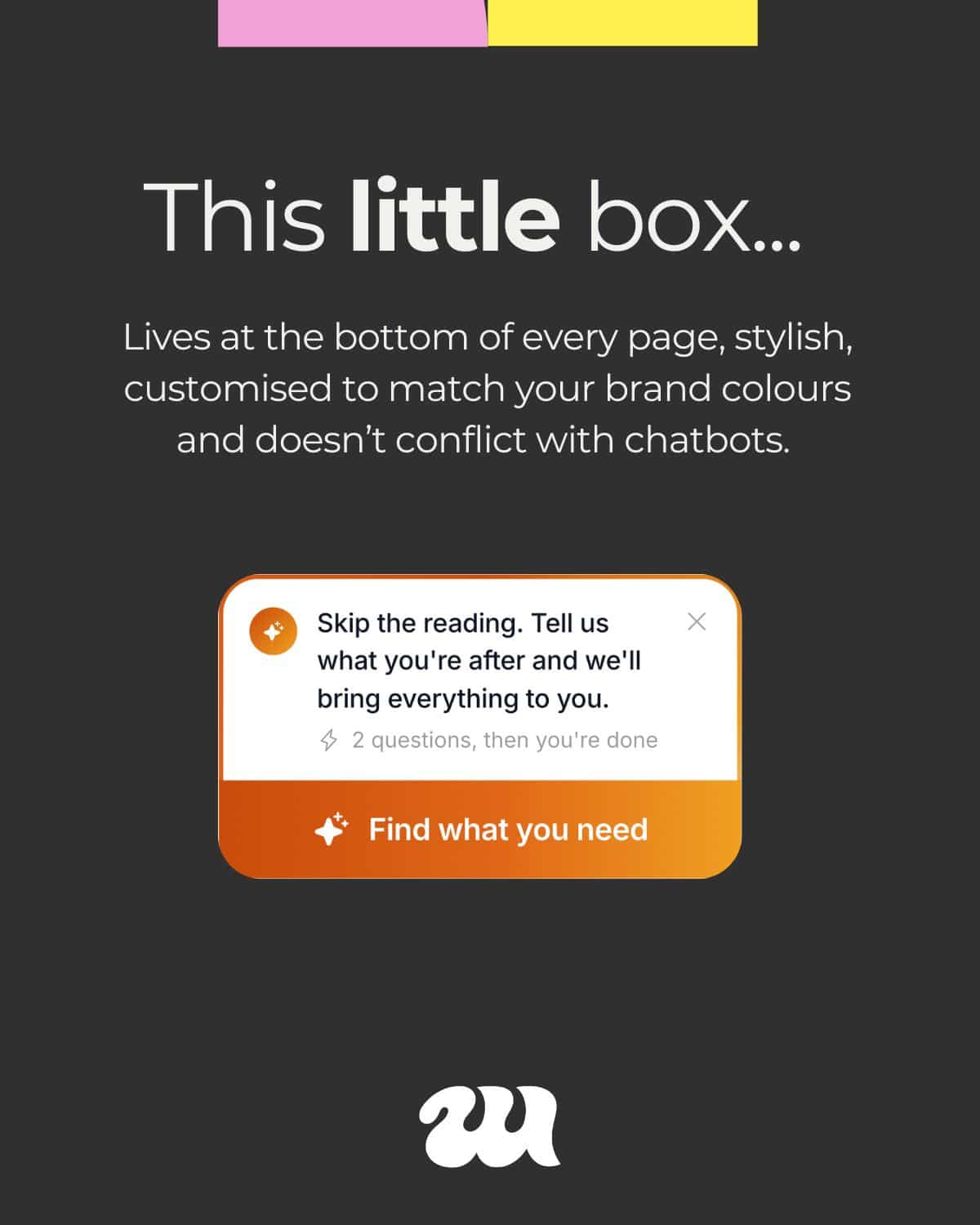
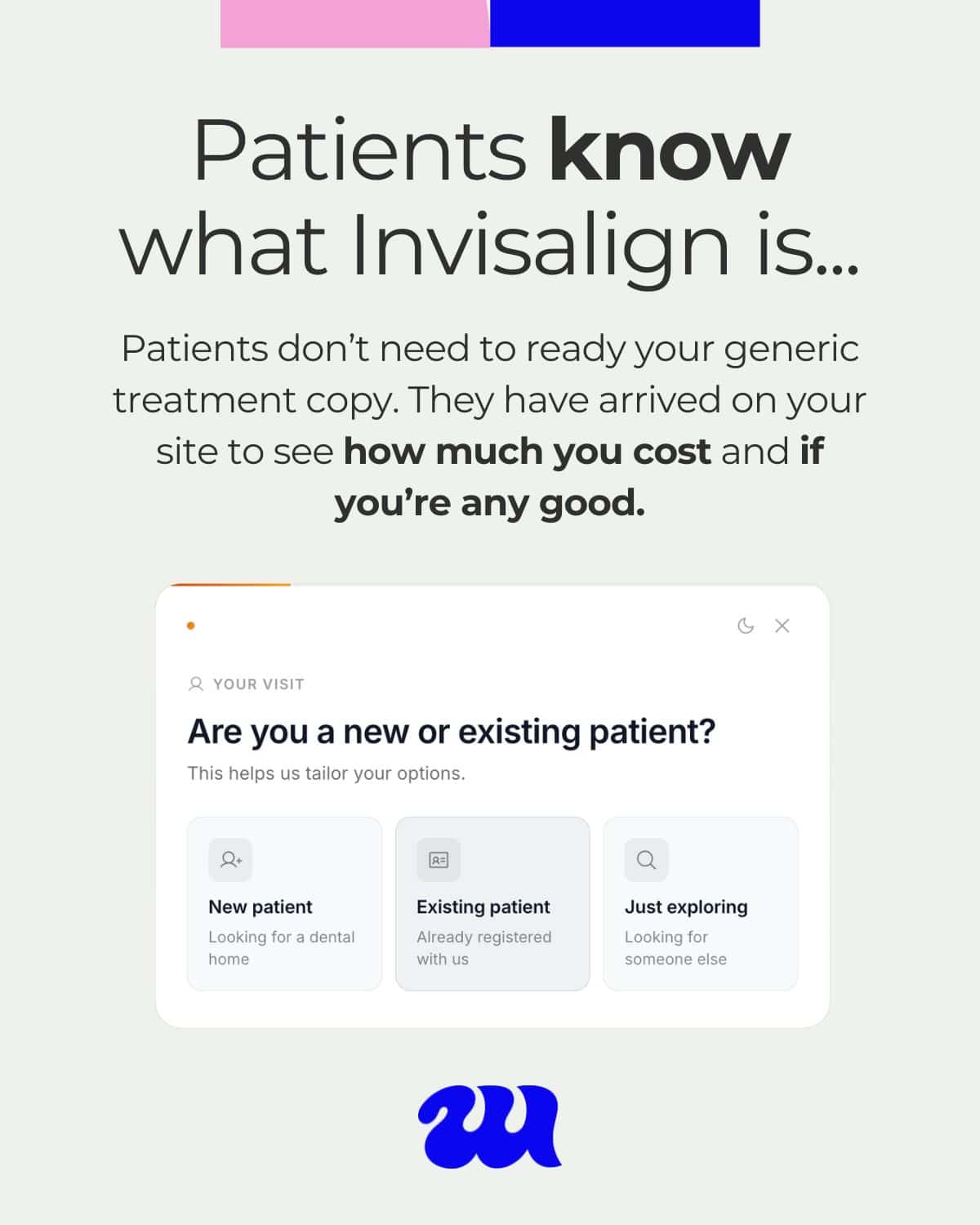
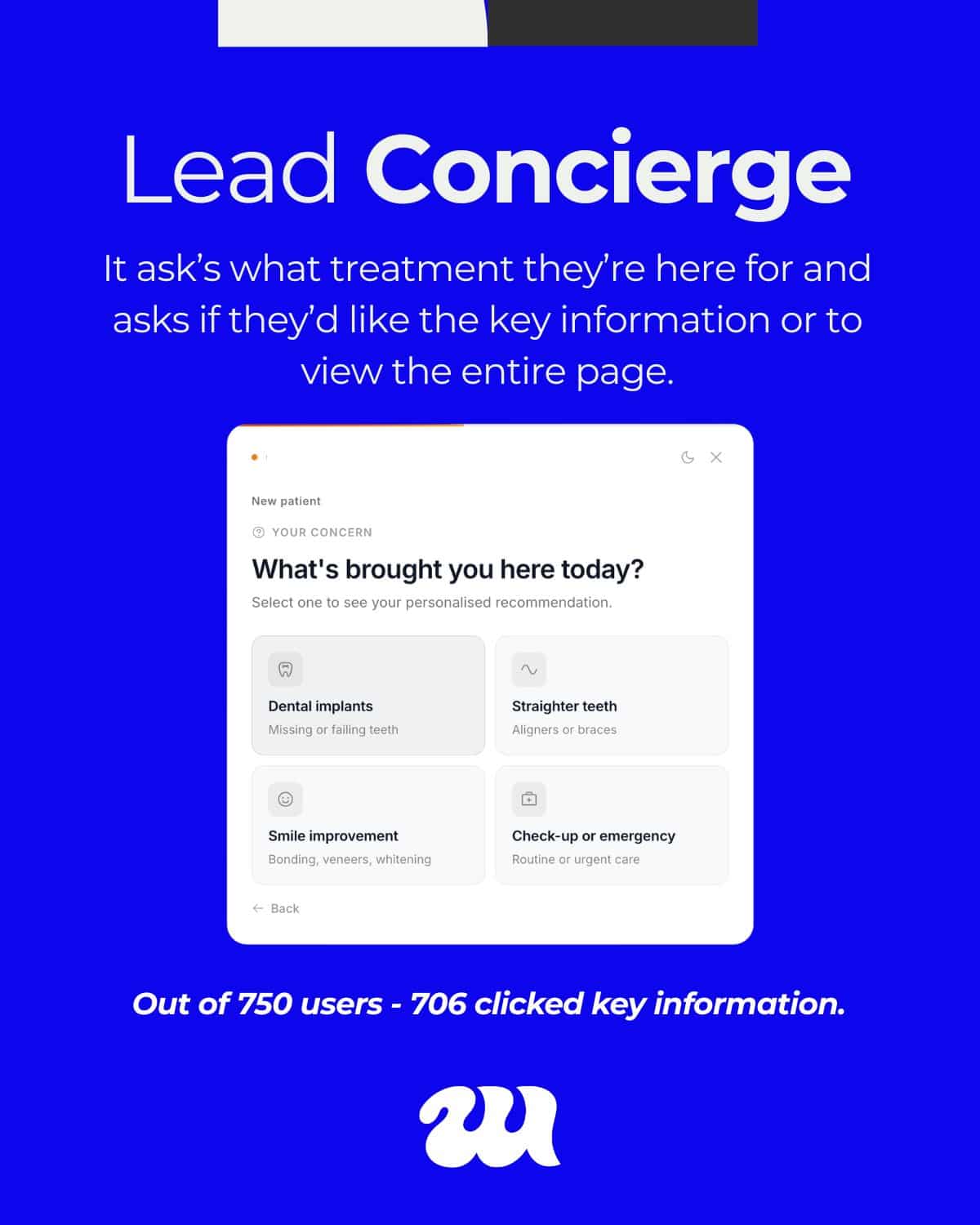
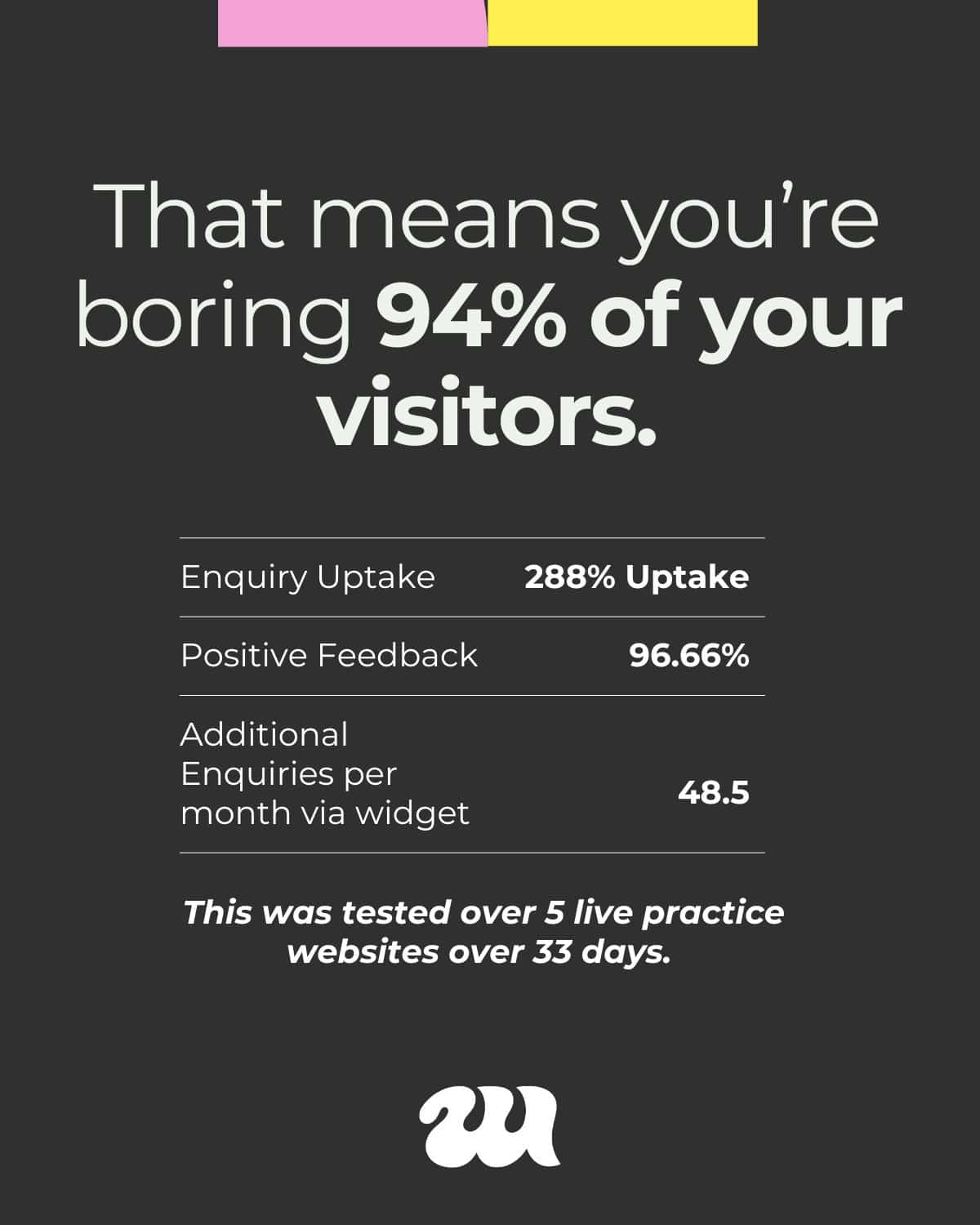
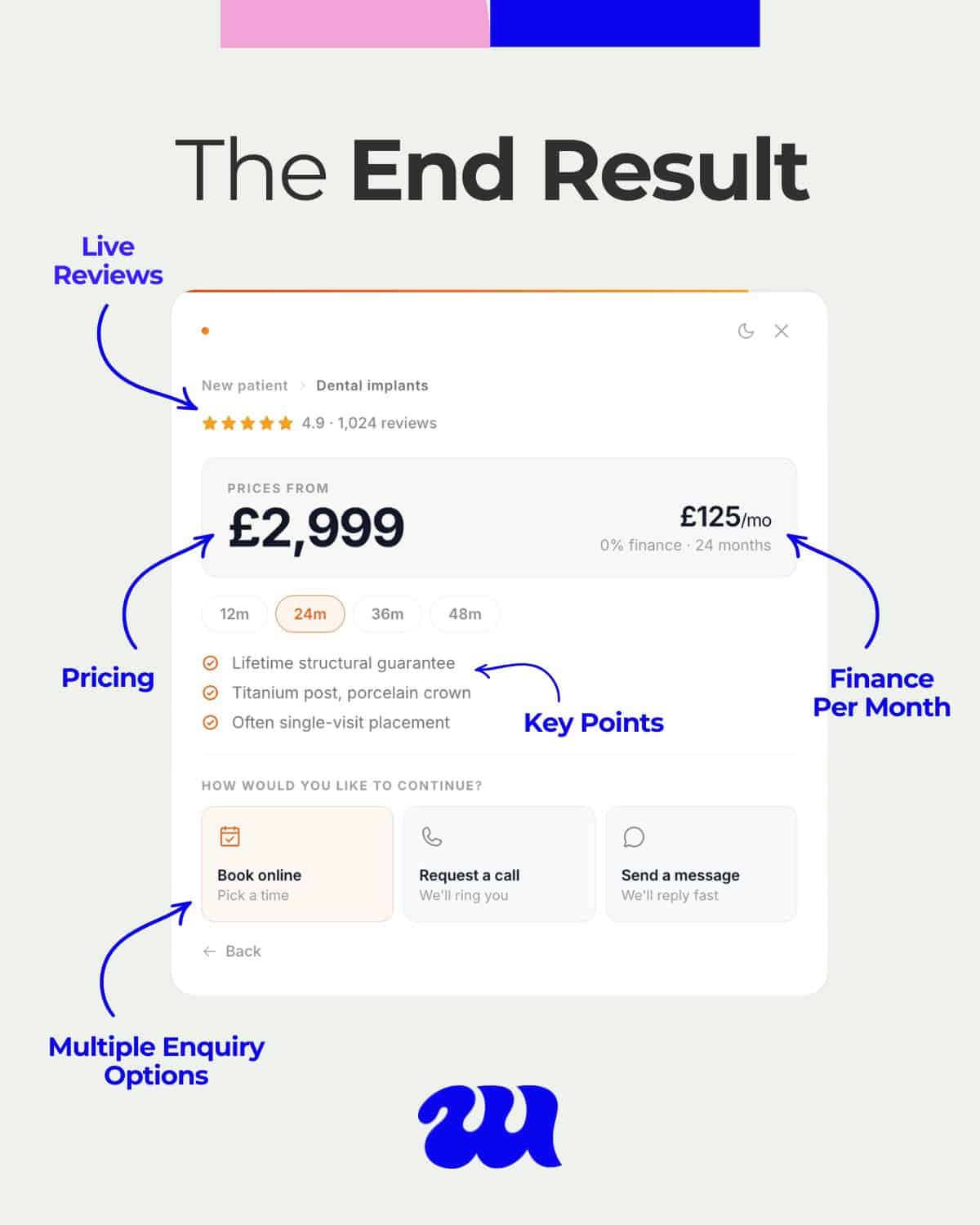
Why it matters: patients are busy. A clearer information layer can reduce friction, support conversion and help your website answer buying questions faster without cluttering every treatment page.
06.What to prepare before redesigning your dental website
If you are planning a new dental practice website, the best results usually come from preparing the right information before design begins.
- Your growth priorities: Which treatments do you want more enquiries for?
- Your locations: Which towns, areas or patient catchments matter most?
- Your current bottlenecks: Is the issue traffic, conversion, lead quality, follow-up or tracking?
- Your proof assets: Reviews, team photography, case studies, before-and-after images, videos and awards.
- Your patient journey: How should people move from treatment interest to consultation enquiry?
- Your integrations: Online booking, CRM, forms, call tracking, WhatsApp and analytics.
These decisions shape whether your website becomes a genuine growth asset or just a fresh design. The best dental websites in the UK are planned around patient behaviour before a single page is built.